Electric car on an operating lease: who provides charging and who owns the charger
With an operating lease, the company plans charging itself unless the leasing company offers a charger in the contract: the terms published by Europcar and InterCar include neither a charger nor electricity. The car goes back when the contract ends, but the charging spot stays, so decide in advance where the charger goes and who owns it.
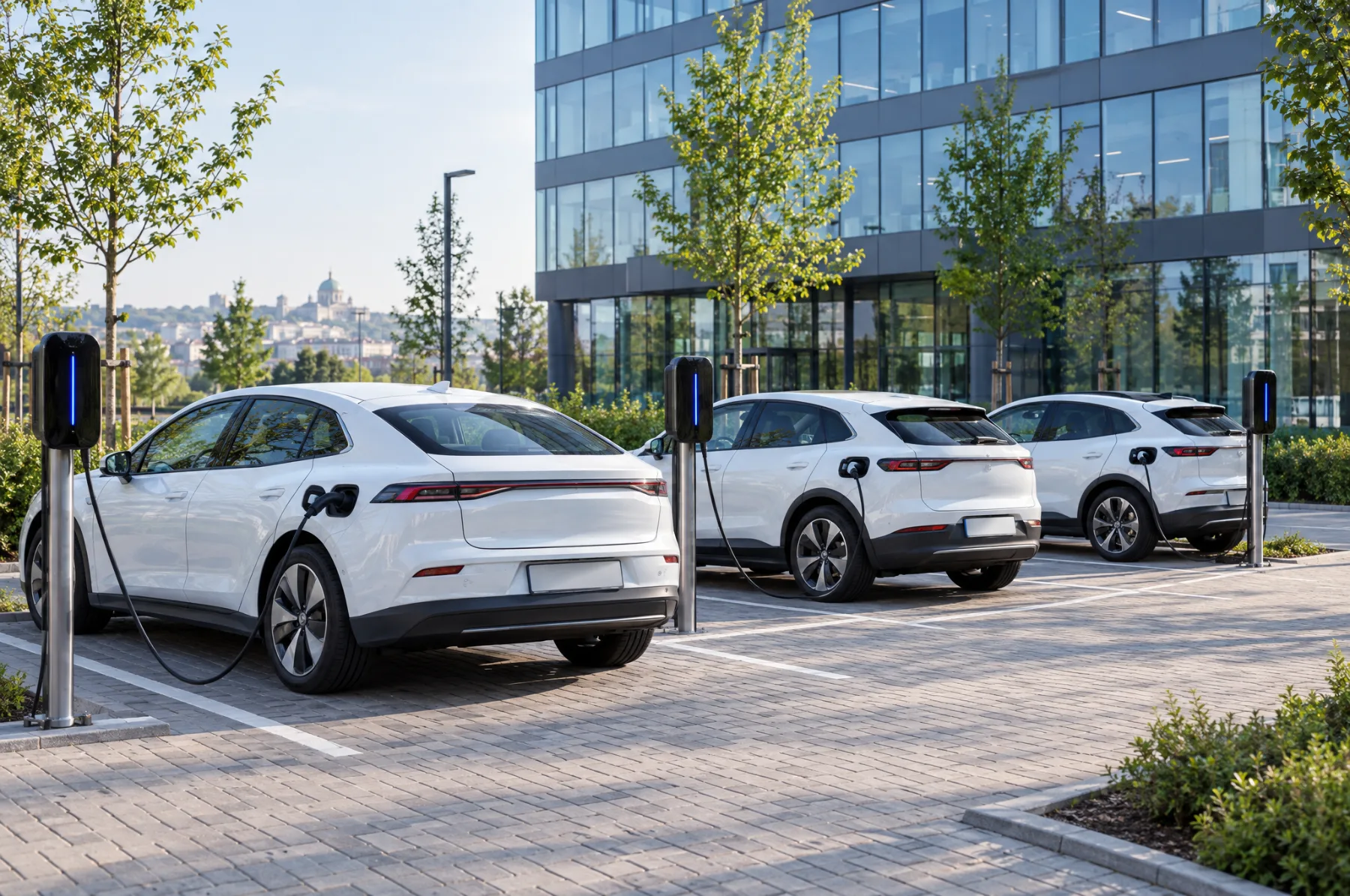
The monthly price of an operating lease covers the car, not the place where it charges. So the company has three things to settle: where the car is parked overnight, who pays for the electricity and who owns the charger at that spot. How this works at an employee’s home and in the company car park is described on the page about chargers for company cars.
What the monthly price of an operating lease covers
Europcar Serbia says an operating lease contract usually runs from 12 to 60 months. The fixed monthly price includes regular servicing, registration, technical inspections and insurance, summer and winter tires with changing and storage, and a replacement vehicle. The contract also has an annual mileage limit.
InterCar offers operating leases for two to five years, at a fixed monthly price that covers all costs except fuel. The price includes mandatory and comprehensive (kasko) insurance, regular servicing, registration and technical inspection, and a replacement vehicle.
Neither of these two pages mentions electric cars, a charger or a card for public charging. For an electric car, the “fuel” is electricity, so who pays for charging and where the car charges should be settled before you sign.
Yesla offers companies monthly and long-term rental of electric cars and multi-vehicle packages. The lineup includes the Tesla Model S and Model X, Renault Zoe, BYD Sealion 7 and the Toyota Proace electric van. Prices and charging terms are not published on its page.
Plan the charging spot independently of the car
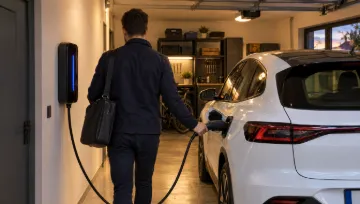
When the contract ends, the car goes back or is replaced with a new one, while the charger and the line to the distribution board stay at the employee’s home or in the company car park. So equip the spot for any electric car: the Type 2 connector is the standard for AC charging in Europe and as a rule fits the next model too. If an employee has no spot of their own, the car charges in the company car park or at public chargers.
The right power depends on how long the car is parked. For a company car parked overnight at an employee’s home, a reinforced socket of 2,3–3,7 kW is usually enough, adding up to about 180 km overnight, depending on the car. This is not an ordinary Schuko socket but a dedicated line from the distribution board with RCD protection.
An 11 kW wallbox makes sense when the car is parked for shorter periods or when the company wants the same setup at every spot. It needs a three-phase connection and enough approved power, and the car takes only as much as its onboard charger allows.
Who owns the charger: the company, the employee or the owner of the spot
Before installation, decide who owns the charger, because that determines what happens to it when the car goes back or the employee changes jobs. There are three options:
- the company buys the charger as its own equipment and decides in advance what happens to it if the employee leaves the company or moves;
- the employee buys the charger for their own spot, and the company reimburses only the cost of electricity for the company car;
- the charger is at someone else’s spot, for example in a rented apartment or garage: you need the owner’s consent and an agreement on what happens to the charger when the lease ends.
Before installation, ask your accountant how to book a charger the company installs at an employee’s home and whether there are tax implications.
Some leasing companies offer a charger as part of the contract. On the Ayvens Serbia website, the home charging page (in English) says a home charger can be part of the lease contract. It also says that the charger, unlike the car, becomes the employer’s property. The text is general for the whole group, so ask what exactly applies to a contract in Serbia and who pays for installation.
Replacing the car doesn’t interrupt metering on the MID meter
A MID meter is an energy meter certified under the European Measuring Instruments Directive (MID). On the charger line it measures how much energy has passed through that spot, regardless of which car is plugged in. When the leasing company replaces the car, metering continues with no new installation and no gap in the monthly statement.
For the same reason, the meter can’t tell a company car from a private one. If an employee’s private car charges at the same spot, the meter-based statement doesn’t separate it, so agree in writing on who may charge there.
At an employee’s home, charging is usually paid through that address’s electricity bill, so the company reimburses the cost at the price on that bill. How this works and what to ask your accountant before the first payment is covered in the guide on charging a company car at home.
The 2026 subsidy and leasing
The deadline for applying for the subsidy for buying a new electric car has been extended to December 1, 2026. The government gives 5.000 euros per car or light commercial vehicle up to 3,5 t, and individuals, sole proprietors and legal entities can apply.
Under the program rules (Official Gazette of the RS, Nos. 12/2026 and 86/2026), financial leasing requires a contract with a leasing company and a down payment of at least 15% of the purchase price. The down payment is made before the subsidy is paid out.
Operating leases are not mentioned in the published information about the program. Whether the subsidy also applies to them and whether it would affect the monthly price, ask the leasing company and the Ministry of Environmental Protection, which runs the program. Check with your accountant how it would be booked.
Questions for the leasing company before you sign
Before signing, ask for written answers to these questions:
- whether a charger is part of the offer and who owns it when the contract ends;
- who pays for installation and who maintains the charger during the contract;
- whether the car comes with a Type 2 cable for public chargers and a card or app account with a charging network, and who pays for that charging;
- how charged the battery is when you pick up and return the car, and whether the difference is billed;
- what happens to the spot and the charger if you swap the car for another model before the contract ends;
- whether the subsidy applies to an operating lease and how it would affect the monthly price.
Install the charger before the car is delivered
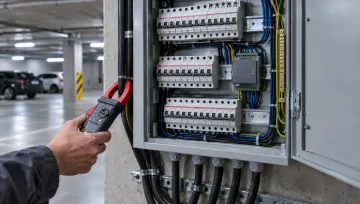
Each spot starts with a site assessment: an electrician checks the distribution board, the approved power and the cable route. The quote follows the assessment, and installing one spot usually takes one working day.
How long it takes depends on where the spot is. For a rented garage, with the owner’s consent and when the building’s common areas are not affected, the whole process usually takes 1–2 weeks. Work on the common areas of an apartment building requires a decision of the residents’ assembly, so the process usually takes 4–10 weeks. These timelines don’t include a possible power increase with EDS, the grid operator.
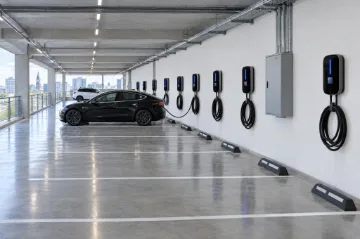
In a company car park with several spots, load management distributes the existing power of the connection among the chargers. If it isn’t enough, the power increase is paid to EDS according to its price list. The request is filed by the owner of the property, so a company in leased premises arranges it with the landlord. You’ll find the calculation for multiple spots in the guide on how much power a garage needs for chargers.
Sources
- Paragraf, citing Biznis.rs, September 10, 2026: deadline for electric vehicle subsidies extended to December 1, 2026 (Official Gazette of the RS, No. 86/2026)
- Europcar Serbia: operating leasing for companies
- InterCar: operating leasing
- Ayvens Serbia: charging an electric car at home (page in English)
- Yesla: electric car rental for companies
This guide was written with the help of AI tools based on the sources listed and was last checked on October 10, 2026. If you spot an error or have newer data, let us know at hello@evolako.com — we publish corrections with a date.
Evolako for company cars
A charger with a MID meter where the company car spends the night — at the employee's home or in the company car park, in Belgrade and surroundings, Novi Sad and Vojvodina. An on-site assessment costs 2.990 RSD with VAT and is credited toward the installation; we reply within 48 hours.
Related guides
Home charging for apartment residents — installation, MID meter and billing down to the dinar.
The iPhone and Android app is coming soon.
Let me know when it’s out →