How much an electric car adds to your power bill: green, blue and red zone
At 30 km a day a car takes about 180 kWh a month. If you charge at night and your household is already in the blue zone, the bill goes up by about 1,030 RSD. The same charging by day costs about 3,540 RSD.
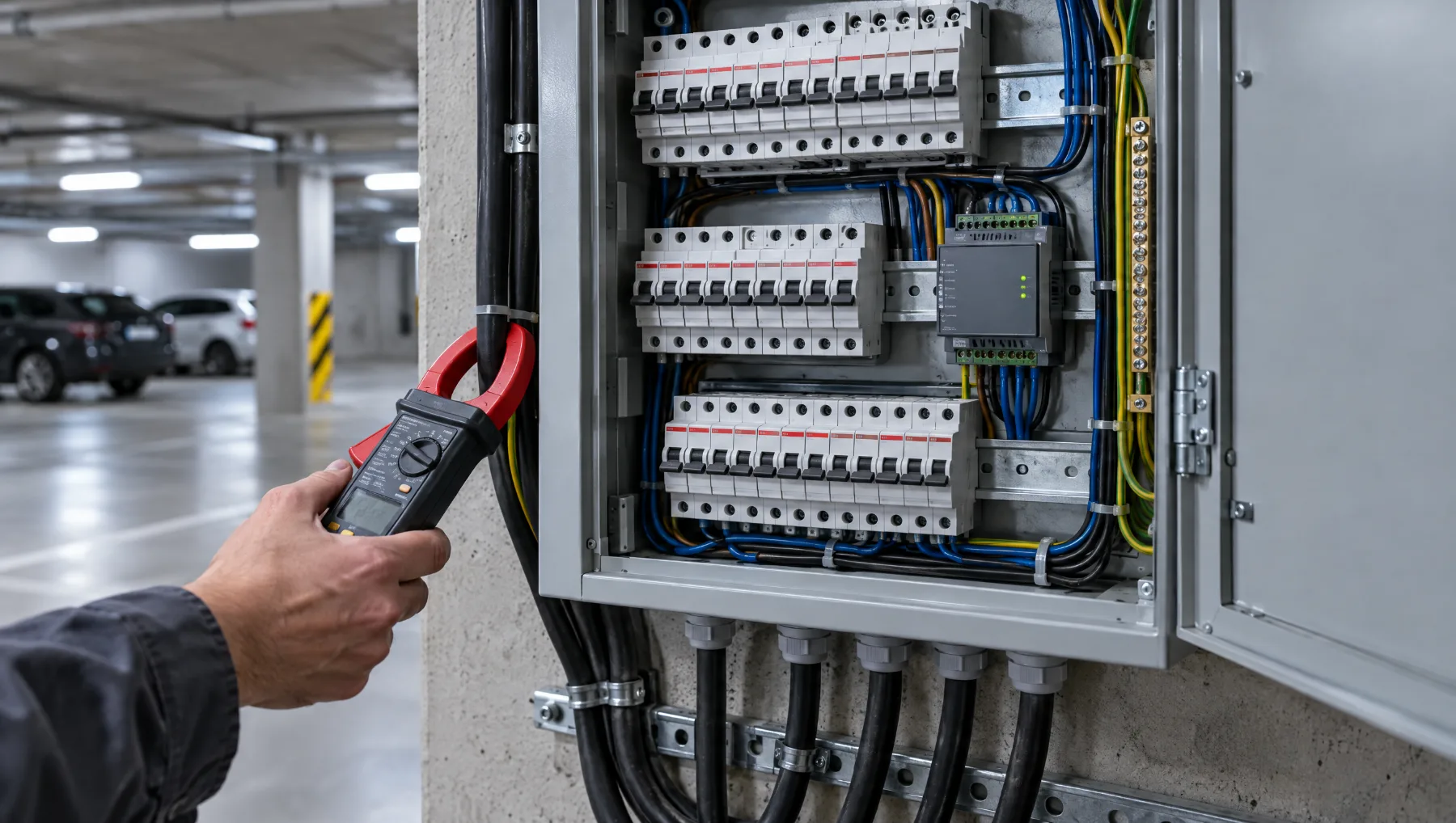
The bill depends on three things: how many kWh the car takes, which tariff you charge in, and which zone that consumption pushes you into. The first depends on your mileage, the other two are up to you.
Below you will find the math by zone, three examples for 30, 50 and 80 km a day, and a way to see what the car alone uses. If you are only planning a charger, first see what is possible in your garage.
A car takes about 20 kWh per 100 km
The average electric car in the EV Database uses 18.9 kWh per 100 km in real-world driving. Charging losses come on top of that. ADAC measured losses of 5.1 to 7.0% at an 11 kW wallbox and 12.7 to 24.2% at a household socket.
For the math we use 20 kWh per 100 km from the grid, which matches charging at a wallbox. A month counts as 30 days.
In winter consumption is higher because of cabin heating and a cold battery, so treat these figures as the lower bound for the cold months.
The zone depends on the household’s total consumption
EPS prices each kWh by zone, and the zone is set by the total monthly consumption on the meter. Up to 350 kWh is the green zone, 351 to 1,200 kWh is blue, and above 1,200 kWh is red. The limits apply to a 30-day period and are scaled for a shorter or longer billing period.
You pay the higher price only for the kWh above the limit, not for all of your consumption. The red-zone limit was lowered from 1,600 to 1,200 kWh on October 1, 2025.
The October 2025 price list still applies after October 1, 2026. A price adjustment has been agreed with the IMF, but neither the date nor the amount has been set, so check the math again when the new decision comes.
One kWh with all charges costs 4 to 38 RSD
On top of the energy price come the renewables fee of 0.801 dinars per kWh and the energy efficiency fee of 0.015 dinars per kWh. Excise of 7.5% is charged on all of that, and then VAT of 20%.
Three examples: 30, 50 and 80 km a day
With a car, a household easily goes over 350 kWh a month, because the car alone takes 180–480 kWh. So the examples assume the household is already in the blue zone and every kWh for the car is charged at the blue price.
If the household uses 200 kWh without the car, the first 150 kWh for the car stay in the green zone. Then night charging for 30 km a day costs about 790 RSD a month.
The red zone is a different story. A home that already uses 1,000 kWh sends 280 kWh into the red zone once you add 480 kWh for the car. The same night charging then costs about 4,040 RSD instead of about 2,740 RSD.
A night kWh in the blue zone is cheaper than a day kWh in the green zone
The biggest difference is not between zones but between tariffs. In every zone, energy at the lower tariff costs a quarter of the higher tariff. A night kWh in the blue zone, about 5.7 RSD, is cheaper than a day kWh in the green zone, about 13.5 RSD.
So moving into the blue zone is not a problem if you charge at night. It gets expensive when charging starts as soon as you get home, at the higher tariff.
In the 50 km a day example, 300 kWh a month costs about 1,710 RSD at night and about 5,900 RSD by day. The difference of about 4,190 RSD a month is the price of charging at the wrong time.
When the lower tariff starts depends on where you live, and you can set the car or the charger to wait for that hour. How to do it brand by brand is in the guide how to make your car charge only at night.
For the red zone, spreading charging over the month helps too. The limit applies to the whole billing period, so there is no point charging more than you need for driving.
How to see what the car alone uses
On the EPS bill the car does not show up separately, only as higher total consumption. The hourly view of a smart meter, once EDS launches its portal, will show when you used power, but not what used it.
Until you have a separate meter, compare bills for the same month before and after the car. The difference in kWh at the higher and lower tariff shows roughly how much the car takes and whether the timer works as it should.
Exact data comes from a separate MID meter on the charger’s circuit. It measures only charging, so you see how many kWh a month go to the car and what that costs at your tariff.
In a shared garage this matters even more. If the charger is connected to the building’s meter, the MID meter is the basis for paying the residents’ association back the exact cost, with no estimates and no arguments at the assembly.
Evolako can install a MID meter together with the charger, and you can see all packages and what they include on the page packages and prices.
Sources
- Danas — the new electricity price list by tariff and zone from October 1, 2025
- Cene i zakon — electricity prices in Serbia 2026/2027, zones and billing
- EPS kalkulator — prices, fees, excise and VAT on the electricity bill
- Biznis.rs — the renewables incentive fee of 0.801 din/kWh
- Nova ekonomija — the renewables fee in 2026 stays the same as in 2025
- Naslovi.net — an electricity price increase is being prepared, September 25, 2026
- ADAC — study of charging losses at a socket and a wallbox
- EV Database — energy consumption of electric cars
This guide was written with the help of AI tools based on the sources listed and was last checked on October 8, 2026. If you spot an error or have newer data, let us know at hello@evolako.com — we publish corrections with a date.
Charge at night and see exactly what your car uses
Evolako installs the charger on a dedicated circuit and, if you choose it, a MID meter that measures only charging. In half a minute you can see what is possible in your garage.
Read next
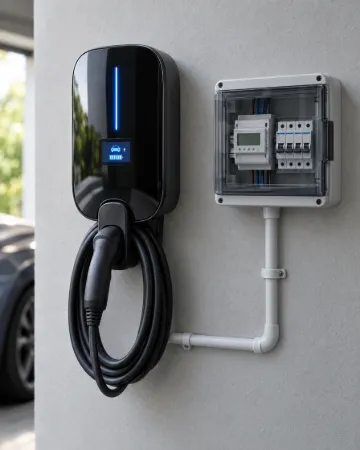
Home charging for apartment residents — installation, MID meter and billing down to the dinar.
The iPhone and Android app is coming soon.
Let me know when it’s out →